Greta Long · 8 October 2026
Uncovering Synchronization Challenges in Distributed Storage Systems Across Various Cloud Providers
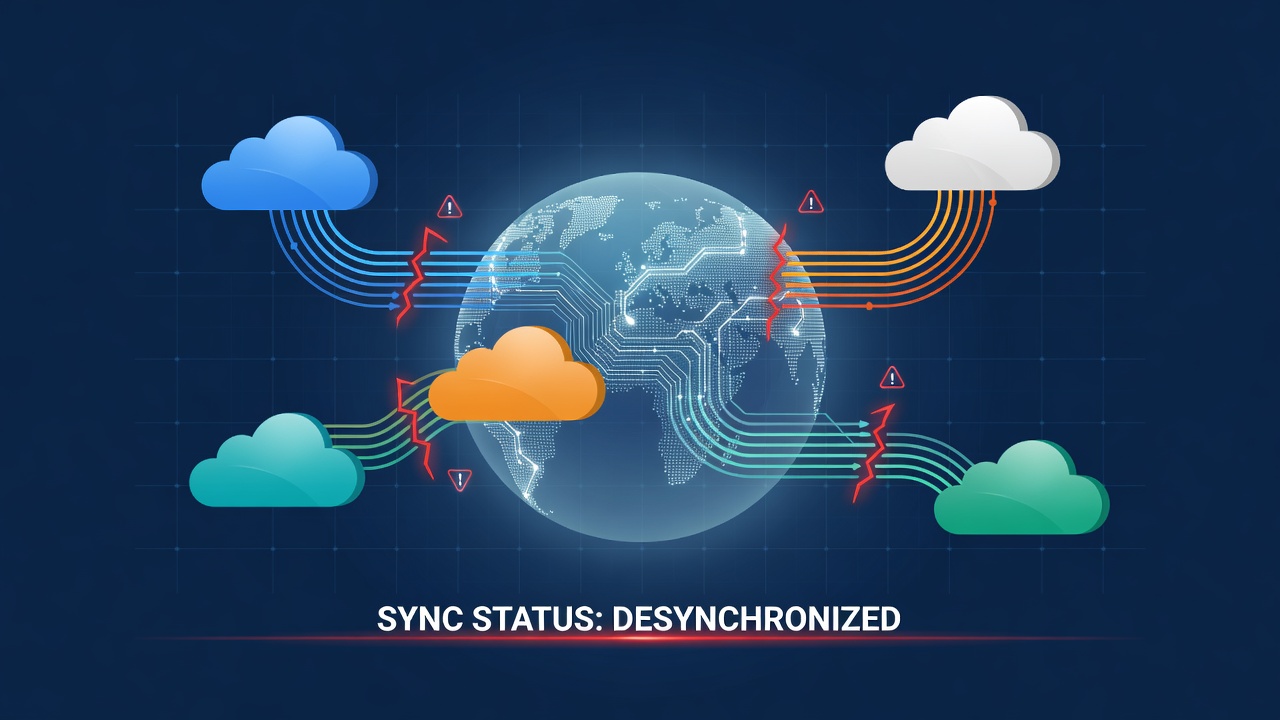
Distributed storage systems form the backbone of modern cloud infrastructure, yet they face persistent synchronization issues that span providers such as AWS, Microsoft Azure, and Google Cloud Platform. Observers note that these challenges arise from differences in replication mechanisms, consistency models, and network conditions that affect how data updates propagate across regions and accounts.
Research indicates that eventual consistency remains a common approach in object storage services, where updates reach all replicas over time but may not appear immediately. This model works well for many applications, though it creates complications when teams attempt cross-provider integrations or migrations that demand tighter coordination.
Core Technical Hurdles in Multi-Provider Environments
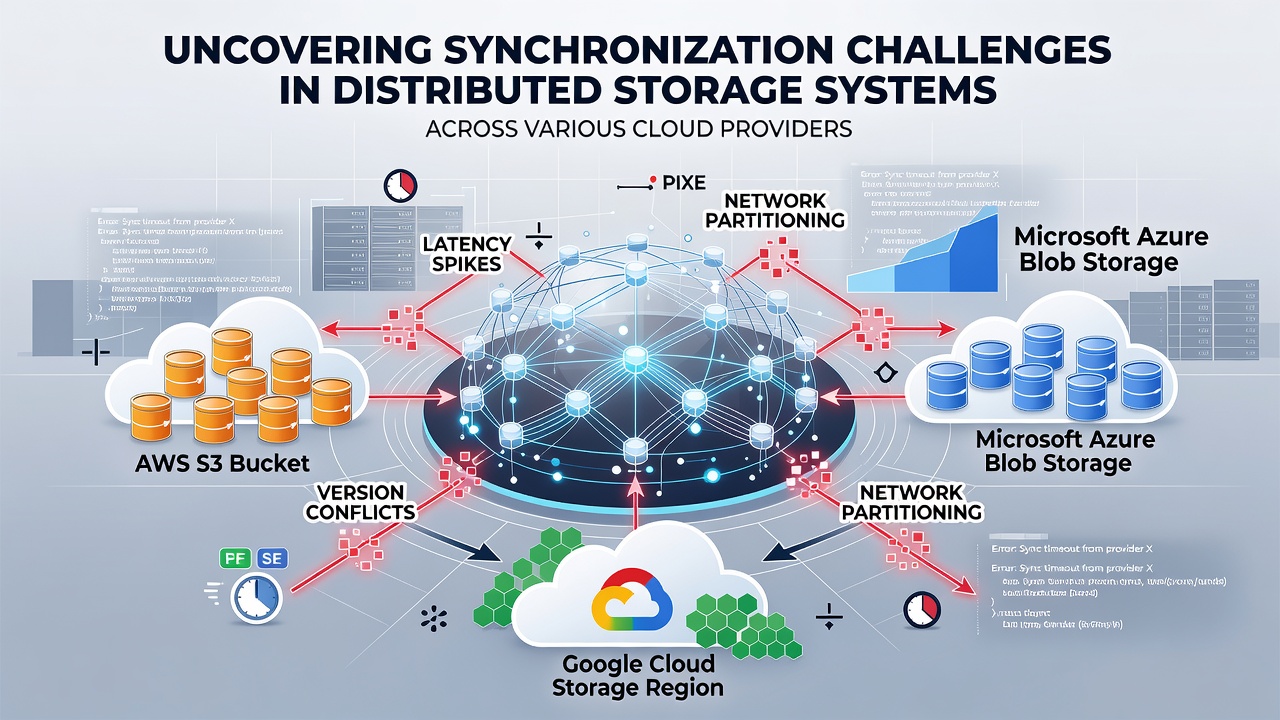
Latency variations between cloud regions often disrupt synchronization timing, since one provider might replicate data within seconds while another experiences delays due to routing policies or congestion. Engineers encounter these differences when managing hybrid setups that combine storage buckets from separate vendors, and the resulting mismatches can lead to version conflicts or stale reads during concurrent operations.
Network partitions represent another frequent obstacle, as temporary disconnections force systems to choose between availability and consistency according to the CAP theorem principles that govern distributed designs. Data shows that such events occur more regularly in multi-cloud configurations because traffic must traverse diverse backbone networks rather than staying within a single provider's infrastructure.
Provider-Specific Approaches and Their Interactions
AWS S3 offers strong read-after-write consistency within a region for new objects while maintaining eventual consistency for overwrites and deletes across availability zones. Azure Blob Storage, by contrast, provides strong consistency by default in many scenarios through its use of lease mechanisms and primary-secondary replication patterns. Google Cloud Storage employs a similar eventual model with configurable options for stronger guarantees in certain use cases.
When organizations combine these services, synchronization tools must bridge incompatible APIs and timing behaviors. Studies from academic institutions have documented cases where automated scripts failed to detect conflicts because one platform reported completion before another had fully propagated the change.
Emerging Patterns Observed in 2026
By October 2026, reports from industry monitoring groups highlighted increased adoption of unified control planes that abstract synchronization logic across providers. These platforms attempt to standardize conflict resolution through techniques such as vector clocks and operational transformation, yet they still encounter edge cases tied to provider-specific rate limits and metadata handling differences.
Figures from a NIST analysis of cloud interoperability reveal that multi-cloud storage deployments experienced measurable rises in reconciliation overhead during the preceding year. The data points to growing demand for better observability tools that can track propagation delays without requiring custom instrumentation on each side.
Practical Mitigation Strategies in Use
Teams address these issues through several established methods. Change data capture feeds allow one system to push updates to others in near real time, while periodic reconciliation jobs compare checksums or Merkle trees to identify divergences. Some implementations incorporate application-level locking to reduce the window during which inconsistencies can arise.
Researchers at various universities have examined how metadata synchronization compounds these problems, since object tags, access policies, and lifecycle rules must also align across platforms. A mismatch in policy enforcement can expose data or block legitimate access even when the underlying content remains intact.
Conclusion
Synchronization challenges in distributed storage persist because each provider optimizes for its own architecture and customer base, creating friction at integration points. Continued work on open standards and improved tooling offers paths forward, while current practices rely on careful monitoring, staged rollouts, and fallback procedures to maintain data integrity across environments.