Mara Wolf · 10 September 2026
Examining Performance Shifts in Web Properties After Cloud Platform Migrations
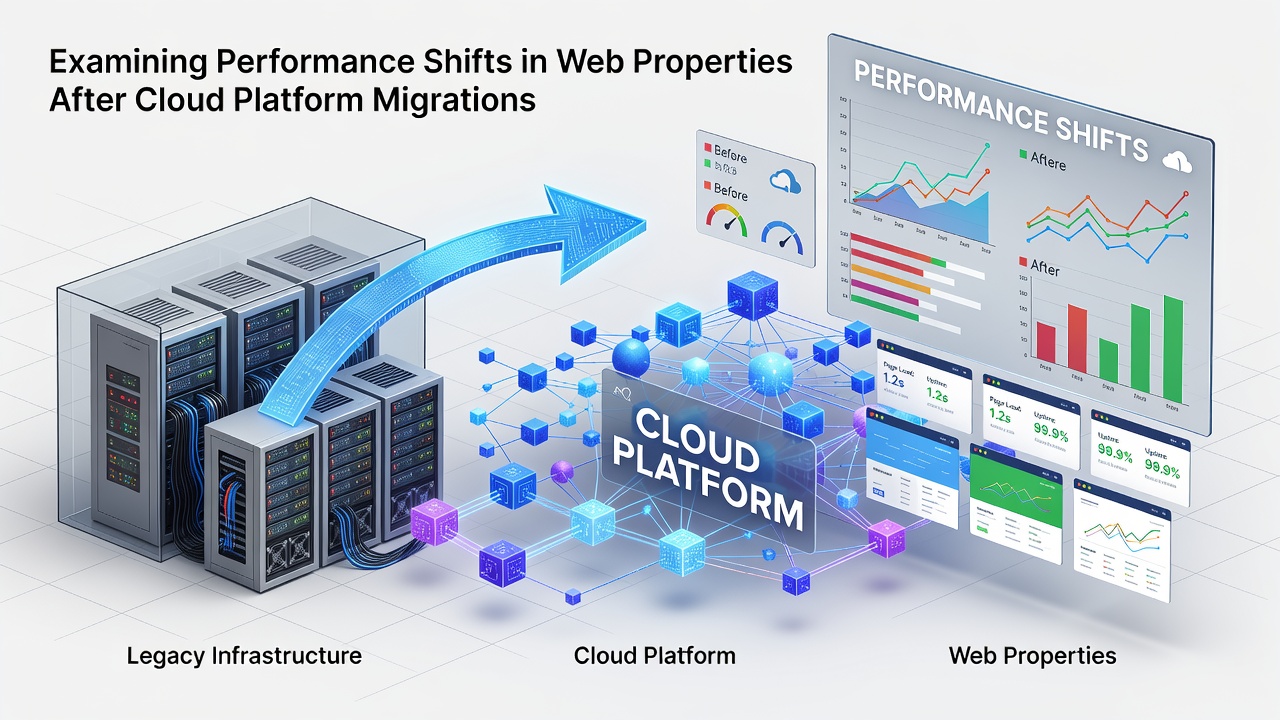
Web properties undergo measurable changes when teams complete migrations to cloud platforms, and researchers track these shifts through metrics such as page load times, server response rates, and uptime percentages that organizations monitor before and after the move. Data from multiple industry reports shows that latency often decreases due to distributed content delivery networks, while bandwidth capacity expands to handle traffic spikes without additional hardware investments.
Those who analyze migration outcomes note consistent patterns across sectors where companies transition from on-premises servers to providers like AWS or Azure. Studies conducted through 2025 revealed average reductions in time-to-first-byte by 15 to 40 percent depending on the original infrastructure setup, and these improvements held steady into September 2026 as more enterprises adopted hybrid configurations that combine public cloud resources with private data centers.
Key Metrics That Shift During and After Migration
Performance indicators evolve in predictable ways once data and applications relocate to cloud environments, yet variations arise based on the chosen architecture and optimization steps taken during the process. Observers track core web vitals including largest contentful paint and cumulative layout shift because search engines factor these into ranking algorithms, and figures from academic analyses indicate that properly configured cloud instances frequently deliver scores that exceed legacy system baselines.
Resource utilization metrics also transform as auto-scaling features activate during peak periods, and this leads to lower idle server costs while maintaining consistent availability. Research indicates that downtime incidents drop significantly after migration when teams implement redundancy across multiple availability zones, although initial transition phases sometimes introduce temporary instability if DNS propagation or database synchronization encounters delays.
Real-World Examples from Recent Migrations
One retail platform that completed its move to a major cloud provider in early 2025 reported a 28 percent increase in average session duration alongside faster checkout completion rates, and similar results appeared in a logistics company case study where global users experienced reduced packet loss after content shifted closer to regional edge locations. Data shows these gains stemmed from integrated caching layers and load balancers that distributed requests more evenly than the previous dedicated server setup allowed.
Another instance involved a media site that migrated its video streaming infrastructure, resulting in higher concurrent viewer capacity without proportional rises in operational expenses, and metrics collected post-migration confirmed that error rates fell below previous thresholds while throughput rose measurably during live events. Those who reviewed the logs found that content delivery network integration played a central role in sustaining performance under variable demand.

Factors Influencing Performance Outcomes
Configuration choices made during the migration determine much of the observed impact, and experts highlight the importance of right-sizing instances along with selecting appropriate storage tiers that match workload patterns. Organizations that skip thorough testing often encounter bottlenecks related to network latency between services or misaligned security group rules that restrict data flow.
Geographic distribution of cloud regions further affects results because users in distant locations benefit when providers maintain points of presence nearby, and reports from international bodies such as the National Institute of Standards and Technology outline standardized approaches that help minimize these variables. Application code optimizations performed alongside the infrastructure change frequently amplify gains, whereas unaddressed legacy dependencies can limit the extent of improvement.
Monitoring and Adjustment Practices
Teams establish baseline measurements prior to migration and continue tracking the same indicators afterward to quantify shifts accurately, and this practice allows for targeted tweaks such as adjusting cache expiration policies or enabling compression on specific assets. Continuous monitoring tools integrated into cloud consoles provide real-time visibility into these metrics, enabling rapid responses when anomalies appear.
Longer-term observations reveal that performance can continue evolving months after the initial cutover as teams refine resource allocation and adopt newer platform services, and evidence from longitudinal studies supports the value of periodic audits that compare current data against early post-migration results. Such reviews help sustain gains while identifying opportunities for further refinement.
Conclusion
Performance shifts following cloud platform migrations reflect a combination of infrastructure changes, configuration decisions, and ongoing management practices that organizations implement over time. Data collected through 2026 demonstrates measurable improvements in several key areas when migrations follow structured methodologies, and these outcomes depend on factors including workload characteristics and regional deployment strategies. Continued analysis of these patterns provides valuable information for teams planning similar transitions in the future.